Loading...
First Round of Abstract Submission Ends: Dec 31, 2026
Extended Early Bird Ends: Dec 28, 2026

Plenary Speakers

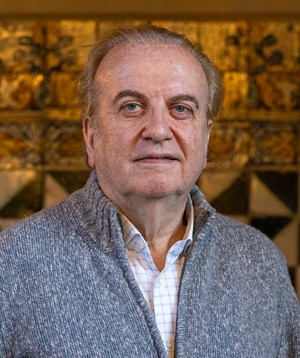
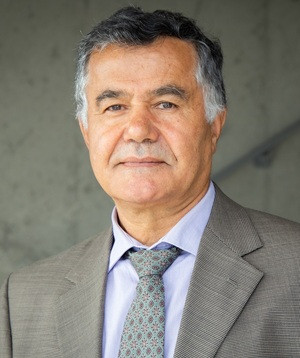
Prof. Damià Barceló
University of Almería, Spain
Title: Analysis , Fate and Removal of Per- and Polyfluoroalkyl Substances (PFAS) in the Global Aquatic Environment: Perspectives and Combined Risks with Microplastics
ShortCVHonorary Adjunct Professor, email: damiab@ual.es,Chemistry and Physics Department, University of Almeria, 04120, Almeria, Spain, Full Research Professor IDAEA-CSIC,Barcelona, Spain since 1999-january 2024, now retired. Awarded as Doctor Honoris Causa by the Universities of Ioannina, Greece, in 2014 and by the University of Lleida, June 2021 and Almeria , Spain in May 2022. Honorary and Guest Professor at ZAFU, Hangzhou, China in since 2019 , Foreign Expert of East China University of Science & Technology, Shanghai, China, 2021-2026 and High-level expert from Shanghai University, China, 2023-2026. From January 2022 till October 2026 he has been appointed Adjunct Professor in Sustainability Cluster, School of Engineering at the UPES, Dehradun, India .Member of the International Scientific Advisory Committee of the Chinese Research Academy of Environmental Sciences(CRAES), Phase I 2020-2024 and Phase II 2025-2029. Distinguished Professor of Zhejiang A& F University, March 2025-March 2027.

D Barceló has received the following awards:
2024 Enzo Tiezzi Medal from the Societa Chimica Italiana- Italian Chemical Society;
2023. Prize of the Division of Analytical Chemistry (DAC) of the European Society of Chemistry (EuChemS) Euroanalysis,Geneva
2023. King Hamad Prize for Agricultural Development in the category of Best Agricultural Research & Studies , Bahrein
2023. Distinguished Scientist from the Chinese Academy of Sciences(CAS)
2023.Fellow of the Royal Society of Chemistry, FRSC
2023 Member of the Academie Nationale de Pharmacie, Paris;
2012 Recipharm Environmental Award, Sweden and Prince Sultan Bin Abdulaziz International Prize for Water (PSIPW), 5th Award on Water Management & Protection, Saudi Arabia
2007 Prize King Jaime I on the Protection of Nature from Generalitat of Valencia, Spain
1998, Member of the Institute for Catalan Studies, IEC, Barcelona,Spain

D Barceló has supervised > 69 PhD students, since 1992 – to date . He has been Instructor of short courses at PITTCON, SETAC-NA, SETAC-AP and ExTech conferences since early 2000. D Barceló expertise is on analysis, fate , risk and removal of emerging contaminants, nanomaterials and microplastics from water as well as sewage epidemiology of drugs and proteins using advanced mass spectrometric techniques. Hirsch-Index of 203 / 160/143 and total number of citations over 183K / 124.6K/102.6K (sources Google Scholar / Scopus/Web of Science) and over 1500 publications . Research.com ranked in 2026 D Barcelo as 5th and 32nd environmental scientist and chemist in the world with H index 185 and 174, respectively. He is Editor-in-chief of the book series Wilson + Wilson Comprehensive Analytical Chemistry from Elsevier since 1997- today and co-editor-in-chief of the Handbook of Environmental Chemistry book series from Springer since 2007-today and Advances In Chemical Pollution, Environmental Management and Protection) since 2016-today . Since March 2025 Co-Editor-in-chief of the journal Earth: Environmental Sustainability (EESUS). Since 1993 to date he has been editor and co-editor of 40 books on environmental chemistry.
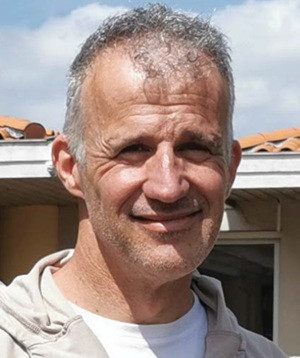
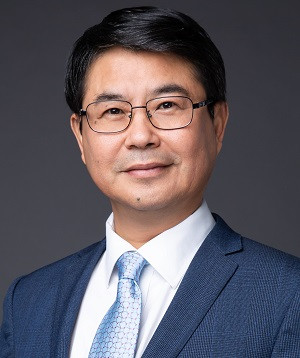
Prof. Jean-Pierre Wigneron
Université de Bordeaux, France
Title: Operational monitoring of forest carbon stocks from remote sensing
He has a Master's degree from ENSAE (SupAéro) and a PhD from the University of Toulouse. His main research interests are remote sensing, forest ecology, and the carbon and water cycles.

He is Head of the Remote Sensing Lab at INRAE Bordeaux (IB), a Fellow of the IEEE, a member of the Board of Remote Sensing of the Environment and the Advisory Board of Remote Sensing, and a member of the Scientific Committee of Theia (the French remote sensing data centre). He is the Editor-in-Chief of Frontiers in Remote Sensing.

He developed the L-MEB model, the forward model of the operational algorithms for the SMOS satellite mission of the European Space Agency (ESA).

He has coordinated the development of several vegetation optical depth (VOD) microwave vegetation indexes from satellite missions (e.g. ESA SMOS and NASA SMAP), which are major tools for monitoring forest carbon stocks at continental scales. These indexes are also reference products in the Global Carbon Project of the ESA Climate Office.

He was named a Highly Cited Researcher in 2021 by Clarivate Analytics and was ranked 4th at INRAE on adscientificindex.com.
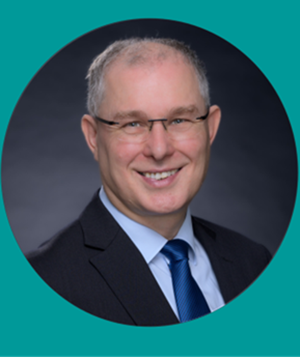
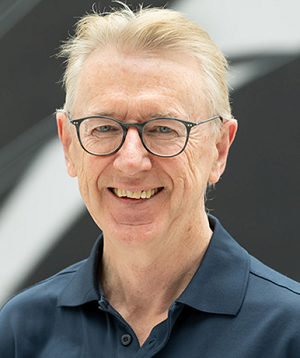
Prof. Jörg Rinklebe
University of Wuppertal, Germany
Title: To be confirmed.
Dr. Jörg Rinklebe is Professor for Soil- and Groundwater-Management at the University of Wuppertal, Germany. He has been selected as ISI Web of Science Highly Cited Researcher in 2019, 2020, 2021, 2022. Prof. Rinklebe was Vize-President, President and Past-President of the International Society of Trace Element Biogeochemistry (ISTEB). His academic background covers environmental science, bioavailability of emerging contaminants, and remediation of contaminated sites. His main research is on soils, sediments, waters, plants, and their pollutions and linked biogeochemical issues with a special focus in redox chemistry. He also has a certain expertise in soil microbiology.

Prof. Rinklebe published plenty of scientific papers in leading international and national journals. According to SCOPUS data base (10.12.2025), he published 603 articles, which have been cited 53,784.0 times with h-index = 124. The Google Scholar total citation= 64,530.0; Google h-index = 134, and i10-index = 519. .

Also, he published six books entitled "Trace Elements in Waterlogged Soils and Sediments” (2016), “Nickel in Soils and Plants” (2018), “Soil and Groundwater Remediation Technologies” (2020), “Vanadium in soils and plants” (2022), “Methylmercury Accumulation in Rice” (2024), Green Technologies for Pollutants Remediation and Recovery from Water and Soil (2026) as well as numerous book chapters.

Prof. Rinklebe was serving as Editor in Chief for Environmental Pollution, and he was Chief Editor of special issues of the Journal of Hazardous Materials; Co-Editor in Chief of the international journal Critical Reviews in Environmental Science and Technology (CREST) and guest editor of the international journals Environment International, Chemical Engineering Journal, Science of the Total Environment, Chemosphere, Journal of Environmental Management, Applied Geochemistry, and Environmental Geochemistry and Health. Also, he is member on several editorial boards (Ecotoxicology, Geoderma, Water, Air, & Soil Pollution, Archive of Agronomy and Soil Science).

Prof. Rinklebe was the chair of the first joint international conferences of Biogeochemistry of Trace Elements” (ICOBTE) and “International Conference on Heavy Metals in the Environment” (ICHMET) in September 2023,. He was an invited speaker (plenary and keynote) at many international conferences. In 2016, Prof. Rinklebe got an appointment as Honorable Ambassador for Gangwon Province, South-Korea which was renewed in June-2018. Also, he got an appointment as Adjunct Professor at the University of Southern Queensland, Australia, Visiting Professor at the Sejong University, Seoul, South Korea and Guest Professor at the China Jiliang University, Hangzhou, Zhejiang, China.

He got those awards:
• Award as "Distinguished Scientist" by the Academy of Sciences, China
• Award for internationalisation of research and teaching: Weltlöwe
• JIOMICS & Proteomass Scientific Society Career Awards
• IESGA Fellowship Award 2023
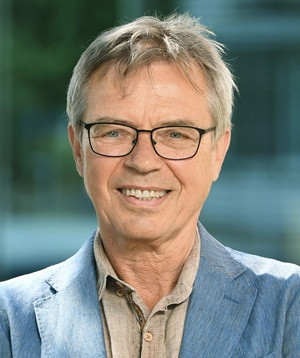
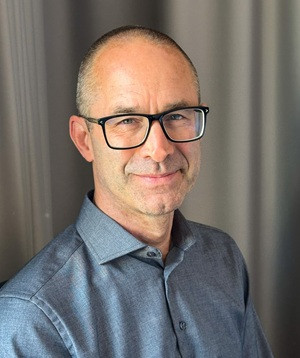
Prof. Jos Lelieveld
Max Planck Institute for Chemistry, Germany
Title: Air quality, climate change, and health
Jos Lelieveld holds a PhD in atmospheric physics from the University of Utrecht in the Netherlands (1990). From 2000 to 2025, he served as the director of the Max Planck Institute for Chemistry in Mainz, Germany. He is also a professor at Mainz University and holds several international honorary professorships. He has contributed fundamental knowledge about the chemistry of atmospheric change and its effects on air quality and climate. He has (co)authored more than 650 peer-reviewed publications, is recognized as a highly cited researcher, is a member of international science academies, and has received numerous international distinctions. His studies address the self-cleaning (oxidizing) capacity and atmospheric composition. He develops methods to trace air pollution from both natural and anthropogenic sources and collaborates with medical and public health scientists to evaluate health outcomes, improve air quality, and develop intervention strategies.
Prof. Fariborz HAGHIGHAT
Concordia University, Canada
Title: Air cleaners in energy-efficient buildings: Progress and challenges
Dr. Fariborz Haghighat is a professor in the Department of Building, Civil and Environmental Engineering at Concordia University, Canada. Dr. Fariborz Haghighat’s research aims to achieve sustainability in the built environment. His current research focuses on the fundamentals of heat and mass transport in the built environment and on their applications in the design and analysis of energy-efficient, healthy/immune, and sustainable buildings and communities.

Dr. Fariborz Haghighat is the co-founder of the International Conference on Indoor Air Quality, Ventilation and Energy Conservation in Buildings (established in 1992), one of the most prominent international conferences in this field. He is a Fellow of ASHRAE and the International Society of Indoor Air Quality and Concordia Research Chair in Energy and Environment. In 2019, Dr. Fariborz Haghighat was named a Distinguished University Research Professor at Concordia University. In 2020, he was awarded Honorary Membership in the Society of Heating, Air-Conditioning and Sanitary Engineers of Japan.

Dr. Fariborz Haghighat is the Editor-in-Chief of the International Journal of Sustainable Cities and Society, Co-Editor-in-Chief of the International Journal of Energy and Built Environment, and a member of the editorial boards of numerous journals.
Prof. Jianmin Chen
Fudan University, China
Title: Atmospheric Emerging Contaminants--From ambient air to cloud
Jianmin Chen received his Ph.D. degree in Physical Chemistry in 1993 from the Fudan University, Shanghai, China. He is currently the University Distinguished Professor,Member of The Academy of Europe,and now works mainly on atmospheric multiphase chemistry, aerosol science and environmental health. He is one of the pioneers in atmospheric chemistry in China. His group is working on the field observation and laboratory study of the nucleation, biomass burning, and haze formation mechanism. He published over 550 peer-reviewed journal papers, H-index 90. H received many honors and awards including the Member of the Academy of Europe in 2021, the Clarivate Highly Cited Researcher since 2020, Chevalier dans L'ordre des Palmes Cadémiques in 2015, State Council Special Allowance Expert by the State Council of the PR China in 2015. He served as Associate Editors for the J. Geophys. Res.: Atmos., and editorial board members for several international journals in related fields.
Prof. Doug MacFarlane
Monash University, Australia
Title: New Materials and Concepts for Energy Sustainability
Doug MacFarlane is a chemist whose research discoveries include electrocatalytic pathways that use renewable energy to produce green ammonia for fertilisers and fuels. His group has also made significant progress recently in solid state cooling devices and thermal energy storage. He has published more than 800 papers and 30 patents during his career and has been a Highly Cited Researcher since 2020. He is a Fellow of the Australian Academy of Science and in 2024 he was elected Fellow of the Royal Society of London. His group won the Royal Society of Chemistry’s Environment, Sustainability and Energy Horizon Prize in 2023 and again in 2026. He is founder of spin-out companies Jupiter Ionics P/L and ThermaLeap P/L that are scaling up some of the developments from his labs.
Prof. Jerker Fick
Umeå University, Sweden
Title: Mixture exposure drives unexpected bioconcentration
Jerker Fick is an Associate Professor in Environmental Chemistry at the Umeå University, Department of Chemistry. His research focuses on the occurrence, fate, and effects of pharmaceuticals, antibiotics, and other emerging contaminants in aquatic environments. He is internationally recognized for pioneering studies on pharmaceutical pollution, environmental toxicology, and the spread of antibiotic resistance in the environment.

Over the course of his career, Fick has contributed extensively to understanding how human-made chemicals affect ecosystems, particularly aquatic organisms and water quality. His work combines advanced analytical chemistry with ecotoxicology and environmental monitoring and has influenced both scientific research and environmental policy.

At Umeå University, he leads and collaborates in multidisciplinary research projects addressing global environmental challenges, including pharmaceutical contamination, wastewater surveillance, and antimicrobial resistance. He has authored more than 180 scientific publications and is among Sweden's most cited researchers in environmental sciences.